
Anthony Favalli and Florian Tardif form a couple that sparks curiosity, particularly because one operates in the world of communication and tech, while the other is in television journalism. Their relationship, although acknowledged, remains deliberately kept away from the spotlight. This choice of discretion, far from being trivial, is set against a backdrop where LGBT+ public figures face specific pressures online.
Media Non-Exposure Clause: A Rare Contractual Device in Communication
Most articles dedicated to this couple focus on their respective professional journeys or their public appearances. One aspect often overlooked is the legal framework that the couple has established to protect their privacy.
Anthony Favalli revealed, in an exchange published on his LinkedIn profile in March 2025, that he had included a specific media non-exposure clause regarding his couple’s life in several partnership contracts with brands. The objective is clear: to prevent his relationship with Florian Tardif from being used as a marketing tool.
This type of clause remains poorly documented in the digital communication sector. Content creators and digital entrepreneurs regularly negotiate exclusivity or image rights clauses, but the contractual protection of the marital sphere constitutes a distinct approach.
It requires anticipating, from the negotiation phase, the scenarios in which an advertiser might exploit the couple’s image for promotional purposes. An article dedicated to the private life of Anthony Favalli and his partner further details the contours of this relationship between the public sphere and the intimate sphere.
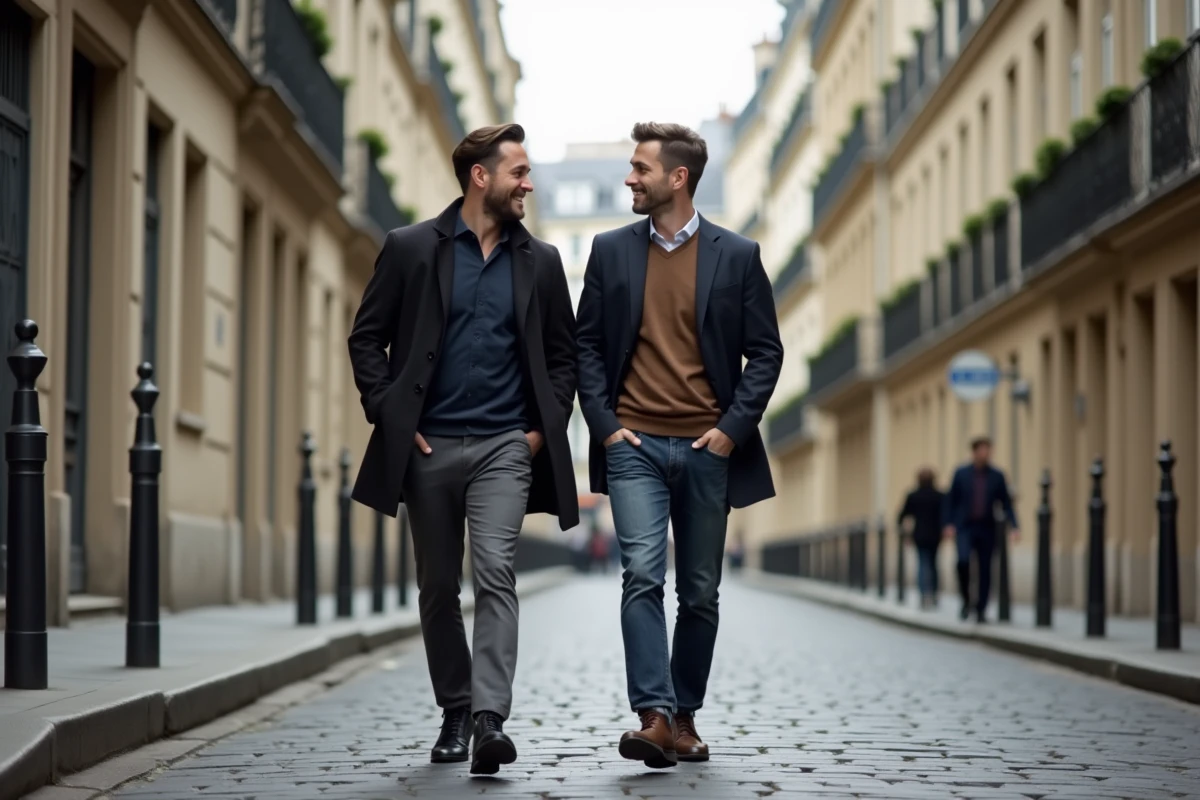
Florian Tardif and the Refusal of Lifestyle Photo Shoots
On Florian Tardif’s side, the protection strategy takes a different form. In an interview with Télérama in the fall of 2024, the journalist explained that he now refuses any “lifestyle” photo shoot at home, even for reputable magazines.
The reason given is specific. In 2023, Florian Tardif noticed a marked increase in intrusive comments targeting his couple on X (formerly Twitter). This unsolicited exposure led him to harden his stance towards media outlets that seek to portray journalists in their private settings.
This decision is part of a broader phenomenon documented by the Defender of Rights. A report published in June 2024 on LGBT+ individuals in the media describes practices adopted by journalists from 24-hour news channels:
- Systematic blurring of their partners’ faces in images shared online
- Refusal to “tag” their partner on Instagram, even during public events
Without naming Florian Tardif or Anthony Favalli, the report describes cases that correspond to their situation: attempts at doxxing targeting the relatives of exposed journalists.
Couple Life and LGBT+ Visibility in French Media
The case of this couple raises a question that the French media rarely addresses head-on. Being visible as a same-sex couple in the public space, while protecting one’s privacy, requires navigating between two contradictory injunctions.
On one hand, the visibility of LGBT+ couples in the media remains a representation issue. On the other hand, this visibility exposes them to concrete risks: online harassment, exploitation by brands, intrusive comments. The Favalli-Tardif couple has chosen protection over exposure, and this choice is reflected in documented legal actions and refusals.
Anthony Favalli, who operates in the world of communication and digital technologies, understands the mechanisms of virality and their consequences on personal life. Florian Tardif, as a journalist, measures the gap between controlled media coverage and the frenzy of social networks. Their common approach is based on one principle: the relationship is not a monetizable content.
Anthony Favalli and Florian Tardif: What Their Journey Reveals About the Public-Private Boundary
The professional trajectories of each shed light on their relationship with media exposure. Anthony Favalli has built his career in business and digital projects, a realm where personal branding can easily spill over into the intimate sphere. Collaborations with brands often involve showcasing one’s daily life, loved ones, and living environment.
Florian Tardif, on the other hand, has developed his career in television journalism, where the boundary between the public person and the private person is constantly negotiated. The available data does not indicate whether other journalists in his newsroom have adopted similar measures, but the Defender of Rights report suggests that these protective practices are becoming widespread among the most exposed information professionals.
What distinguishes this couple is the consistency of their approach:
- On the Favalli side: contractual protection integrated into professional partnerships
- On the Tardif side: systematic refusal of editorial formats that mix private life and professional image
- In common: no voluntary joint presence on social media in a format exploitable by third parties
The relationship between Anthony Favalli and Florian Tardif illustrates a trend that goes beyond their individual case. As public figures’ engagement on social networks becomes more professionalized, managing private life becomes a deliberate, structured act, sometimes legally framed. Their journey shows that it is possible to lead a visible couple’s life without turning it into a showcase.