Creative hobbies encompass any manual or digital activity whose primary goal is to produce an object, an image, or a composition through a process involving aesthetic and technical choices. This definition includes everything from clay modeling to augmented reality-assisted creation. The term covers a wide spectrum, from manual activities designed for children as young as three to complex DIY projects for adults.
Augmented reality and digital creative hobbies: a rapidly expanding field
Platforms for augmented reality creative hobbies are gaining traction among 18-35 year-olds. According to the Kantar report “Digital Leisure Trends 2026,” these tools surpass traditional manual activities in engagement with this age group, while sales of pure physical supplies tend to decline.
This shift does not mean the end of paper, paint, or fabric. It redefines how a creative project can start: scanning a sketch with a marker, modeling it in 3D on screen, and then returning to tangible materials for finishing touches. The hybridization of manual gestures and digital tools creates projects that neither approach could achieve alone.
To explore various formats, creative hobbies on Make World illustrate this convergence between physical and digital creativity, with proposals tailored to different profiles.
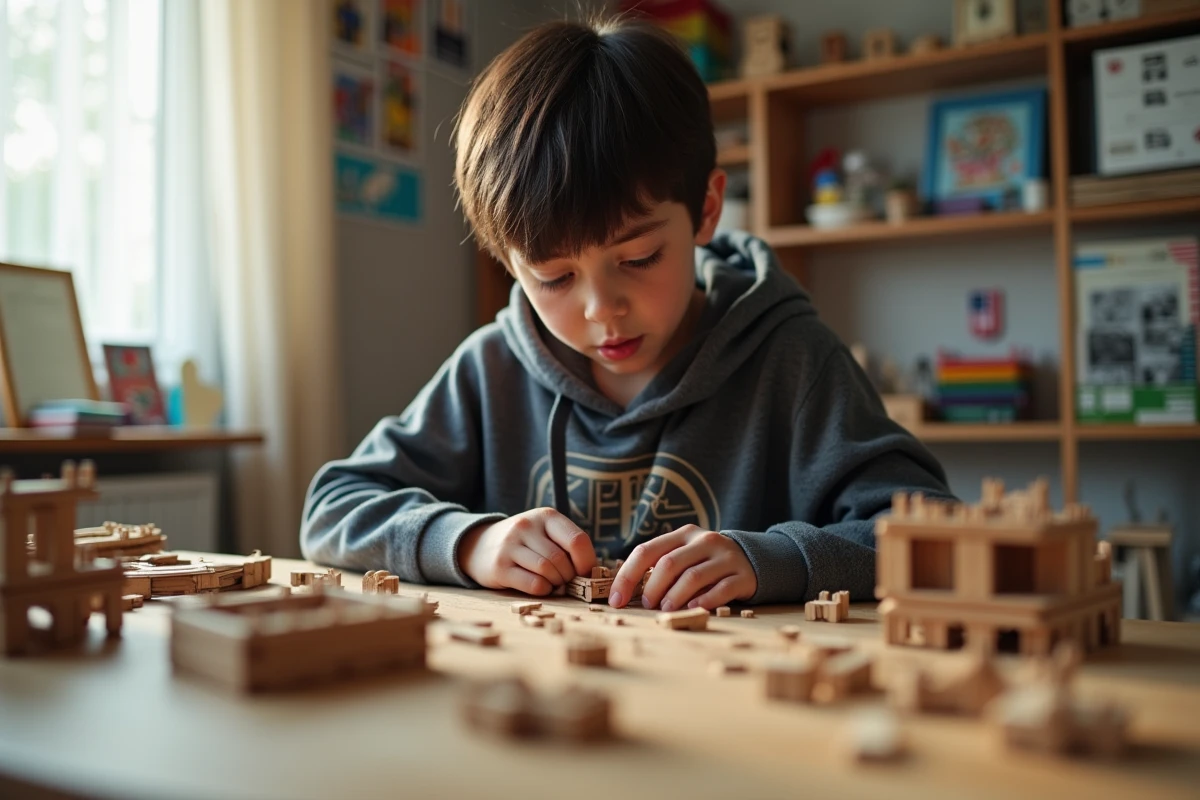
Adapting creative hobbies for neurodivergent children
Most public tutorials offer a list of materials and illustrated sequential steps. This format poses a concrete problem for neurodivergent children (autism spectrum disorders, ADHD, DYS disorders): sensory overload related to textures, difficulty following a sequence of instructions, or hypersensitivity to the smells of glue and paint.
Adapting the workspace before the project
Before choosing an activity, the workspace itself deserves technical attention. Too bright lighting or distracting background noise can render the session unproductive. Working on a plain surface, without patterns, reduces visual load.
- Replace strong-smelling liquid glue with adhesive dots or repositionable tape, which eliminate the olfactory stimulus and the sticky sensation on fingers.
- Offer ergonomic tools: spring scissors to limit gripping effort, wide-handled brushes, soft-tipped markers that do not scratch the paper.
- Break down the steps: one sheet per gesture (cutting, then gluing, then decorating) rather than a comprehensive tutorial of ten sequential steps.
- Plan for a sensory break between two phases, with a transition object (stress ball, neutral modeling clay).
Choosing activities with low sensory overload
Modeling with salt dough or air-dry clay works well because it involves only one material at a time and the gesture is repetitive and predictable. Painting on pebbles, with a palette reduced to three colors, limits simultaneous decisions.
Self-adhesive mosaic kits provide a clear visual framework: each piece goes in a defined area. This guidance reduces choice-related anxiety while allowing room for expression in colors.
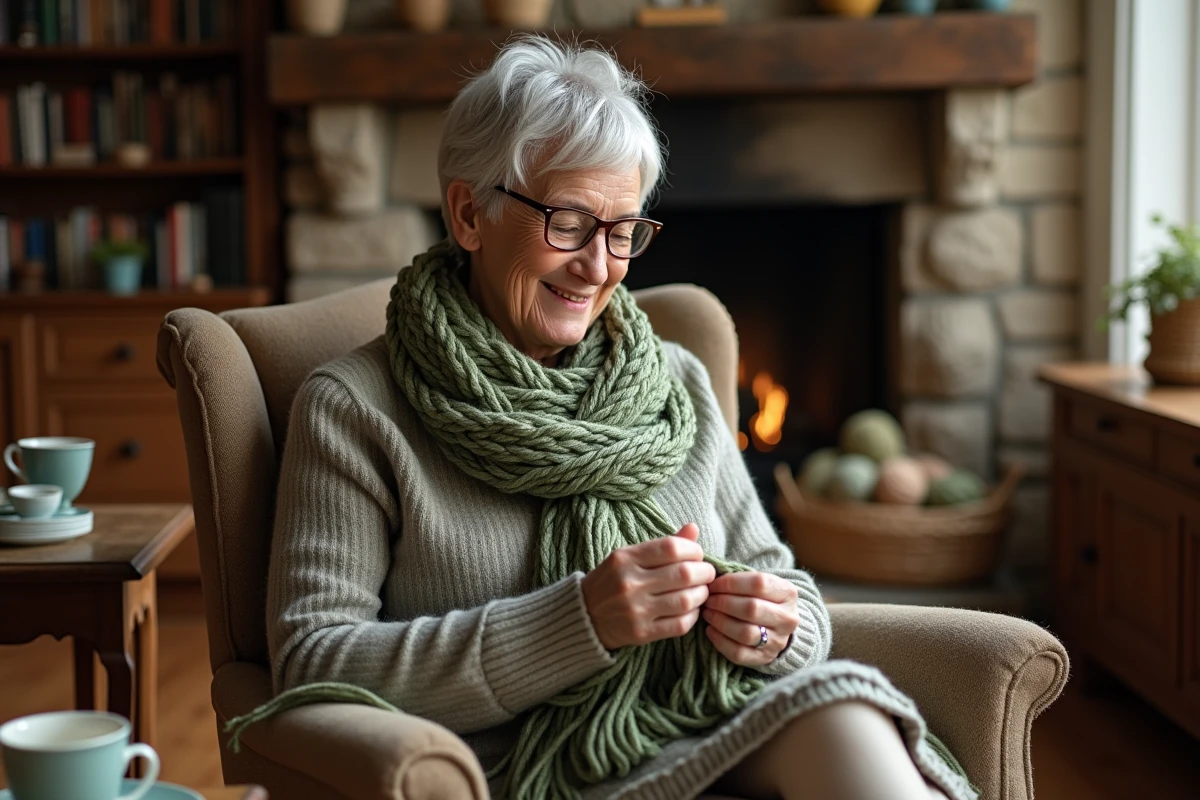
Intergenerational creative workshops: from home to nursing homes
Creative workshops shared between different generations produce documented effects beyond mere entertainment. The study “Creativity and Aging” by the Médéric Alzheimer Foundation (2026 report) compiles field feedback showing that intergenerational workshops in nursing homes significantly reduce senior isolation since autumn 2025.
The principle is based on a skills exchange: a child masters the tablet and can show a digital drawing technique, while a senior passes on textile know-how or traditional folding. This reciprocity distinguishes the intergenerational workshop from simple occupational animation.
Activities that work between a six-year-old and an eighty-year-old
The common denominator is accessible fine motor skills. Projects that are too physically demanding exclude part of the group. Three formats particularly suit this age gap:
- Collage on sturdy cardboard: pre-cutting by a helper, free assembly by participants. The result is immediate and visible.
- Collective painting on a large format (kraft paper mural): everyone works in their area without complex coordination.
- Making flowers from crepe paper, which involves simple gestures (crumpling, twisting, securing) and produces a recognizable object in a few minutes.
The choice of material is as important as the choice of project. Thick paper forgives mistakes, acrylic paint dries quickly and does not require solvents, and beads strung on rigid wire avoid the frustration of flexible thread slipping away.
Low-cost DIY projects with recycled materials
Transforming an everyday object into a creative support reduces the budget and poses a constraint that stimulates inventiveness. A cardboard roll, a glass jar, a scrap of fabric: these recycled materials become the basis for projects accessible to all ages.
The customization of glass jars (candle holders, vases, storage) with acrylic paint and masking tape constitutes a quick project with a functional result. Egg cartons can be cut into shapes of flowers or animals and then painted: an activity suitable for children from four years old.
For adults, handmade bookbinding from scraps of paper or old magazines offers a more technical project. Folding, sewing the spine, and choosing the cover engage various skills without requiring expensive equipment.

Creative hobbies gain relevance when they incorporate real constraints: sensory accessibility, age gap between participants, limited budget. Adapting the format to the audience is as important as the choice of activity itself. A successful workshop is not one that produces the most beautiful object, but one where each participant was able to engage in the process without avoidable obstacles.