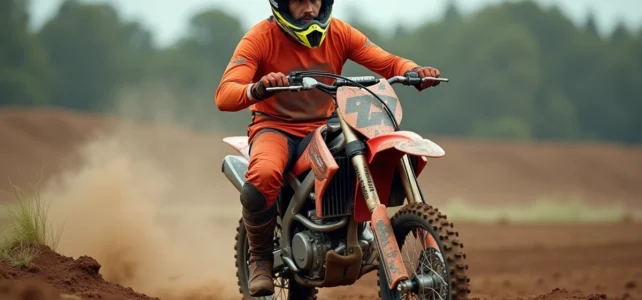
Motocross refers to a motorcycle racing discipline practiced on dirt tracks, consisting of jumps, banked turns, and sections for jumping. This practice challenges both the physical condition of the rider and the mechanics of the machine, and it is distinguished from other off-road disciplines like enduro by the short format of its events on closed circuits.
Physical and technical preparation before riding a motocross bike
A point rarely addressed in buying guides or video tutorials: motocross is a physically demanding sport, and the preparation of the body directly influences progress on the bike. Riding standing on the footpegs, absorbing terrain shocks with the legs, and maintaining the handlebars in ruts requires muscular endurance that most beginners underestimate.
Related reading : Everything You Need to Know About the Diagnosis and Treatment of Fazekas 2 Vascular Leukoencephalopathy
Mountain biking or BMX on dirt paths serves as recognized complementary training by experienced riders. These practices develop balance on loose terrain, trajectory reading, and the reflex of positioning the body upright. Several initiation structures recommend spending a few weeks on a mountain bike before getting on a motorcycle.
The community of enthusiasts gathered on motor-xclub.com regularly shares feedback on physical preparation methods suited for motocross practice. In terms of strengthening, exercises targeting the forearms, abs, and thighs are the most relevant: these are the muscle groups engaged during a riding session.
Recommended read : Everything You Need to Know About CAPTVTY
Protective gear in motocross: what really protects
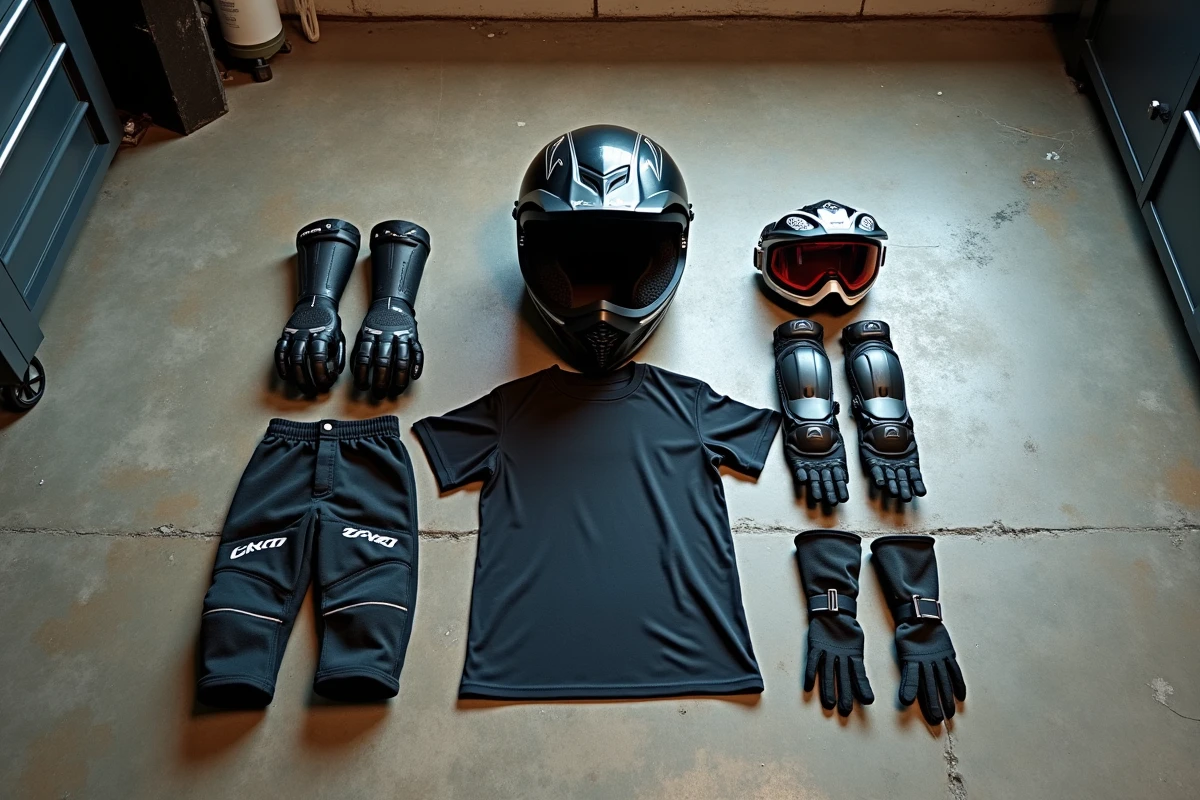
Equipment is not limited to a helmet and a pair of gloves. The rider’s protection relies on several complementary layers, each addressing a specific risk related to falls, stone projections, and heat.
Motocross helmet and ventilation
The motocross helmet differs from a road helmet by its extended chin bar, sun visor, and the absence of an integrated visor (replaced by goggles). The ventilation of the motocross helmet is a criterion of safety as well as comfort: an overheated rider loses concentration and reflexes. Recent models incorporate multiple ventilation channels that allow for continuous airflow even at low speeds.
Body protections and boots
The protective vest (or chest protector) covers the chest, back, and shoulders. Articulated knee pads protect the joint during twists in case of a fall. As for motocross boots, their rigidity protects the ankle and shin but intentionally limits foot flexion to prevent severe sprains during contact with the ground.
- Approved helmet with a high-performance ventilation system, paired with anti-fog motocross goggles
- Chest protector covering the back, chest, and shoulders, worn under the motocross jersey
- High motocross boots with integrated shin protection and gripped sole
- Reinforced gloves at the knuckles, with a palm made of leather or abrasion-resistant material
- Articulated knee pads maintaining the natural flexion axis of the knee
The motocross jersey and off-road pants are not just simple clothing: their loose fit allows for freedom of movement, and the reinforcements at the knees and buttocks limit wear during friction with the seat.
Initiation programs for motocross: accessible courses from a young age
In recent years, driving schools have offered all-inclusive packages for beginners. These courses provide the motorcycle, complete equipment, supervision by qualified instructors, and sometimes even meals. Organizations like XTown Motocross or MXAcademy have popularized this format, which significantly lowers the entry barrier for those who have neither a machine nor equipment.
Several schools welcome students as young as five, with motorcycles suited to the child’s size and weight, grouped by skill level. Motocross then positions itself as a supervised and progressive activity, far from the image of a sport reserved for daredevils. The children’s groups first work on balance and control at low speeds before tackling the first jumps.
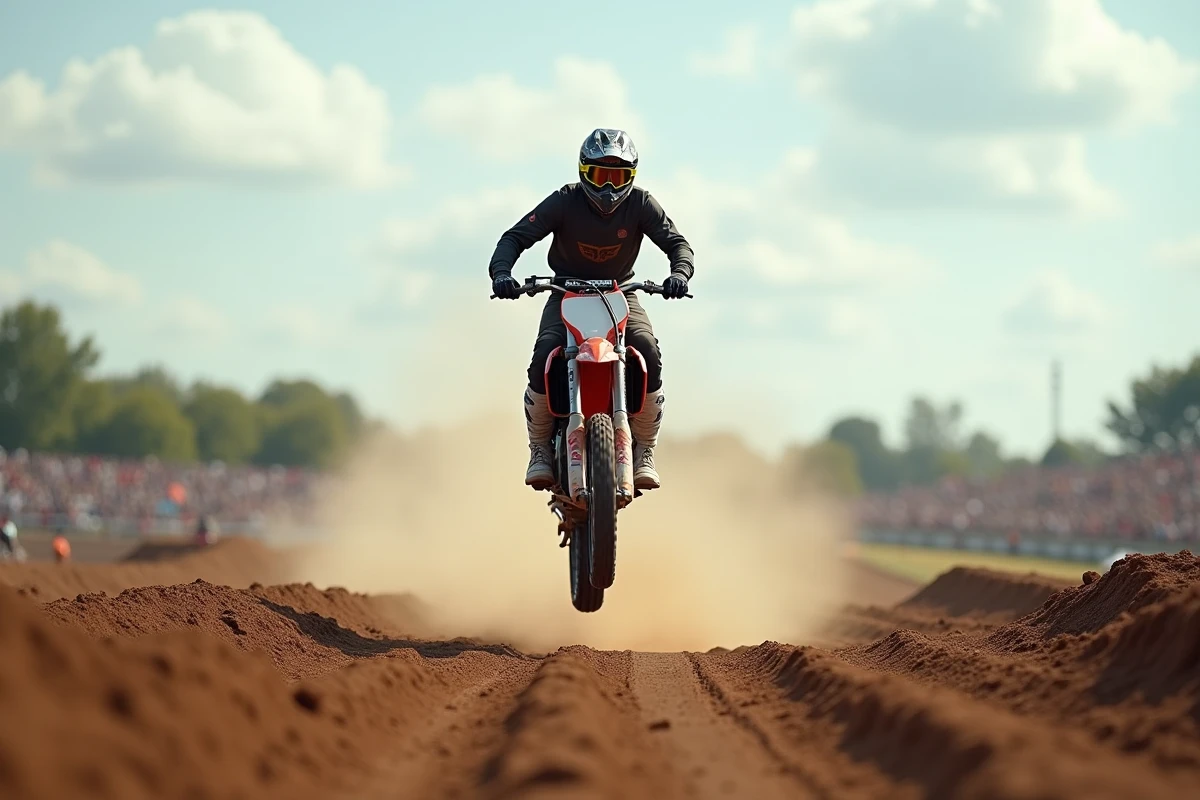
For adult beginners, a day of initiation is usually enough to acquire the basics: standing position on the footpegs, managing the rear brake, and controlling acceleration out of turns. Professional supervision corrects reflexes stemming from road riding, particularly the tendency to brake with the front brake on loose terrain, which causes falls.
Motocross jersey and riding gear: beyond style
The motocross jersey serves more than just an aesthetic function. Its design in quick-drying, breathable fabric regulates body temperature during exertion. Flat seams reduce irritation during repetitive movements, and the long cut at the back prevents the jersey from riding up above the pants while in riding position.
The motocross pants incorporate synthetic leather panels inside the knees to withstand friction against the tank and seat. The comfort of the gear directly influences how long the rider can ride without excessive fatigue or loss of focus.
Specialized brands in off-road equipment regularly offer clearance sales on motocross gear, with sometimes substantial discounts on helmets, gloves, boots, and protections. Keeping an eye on these periods allows access to quality equipment without breaking the budget.
The choice between a two-stroke and a four-stroke engine remains a recurring question among beginners. Two-strokes offer a favorable power-to-weight ratio and simpler mechanics to maintain. Four-strokes deliver their power more linearly, making it easier to learn throttle control. A beginner will benefit from prioritizing a modest displacement to focus on technique rather than power management.