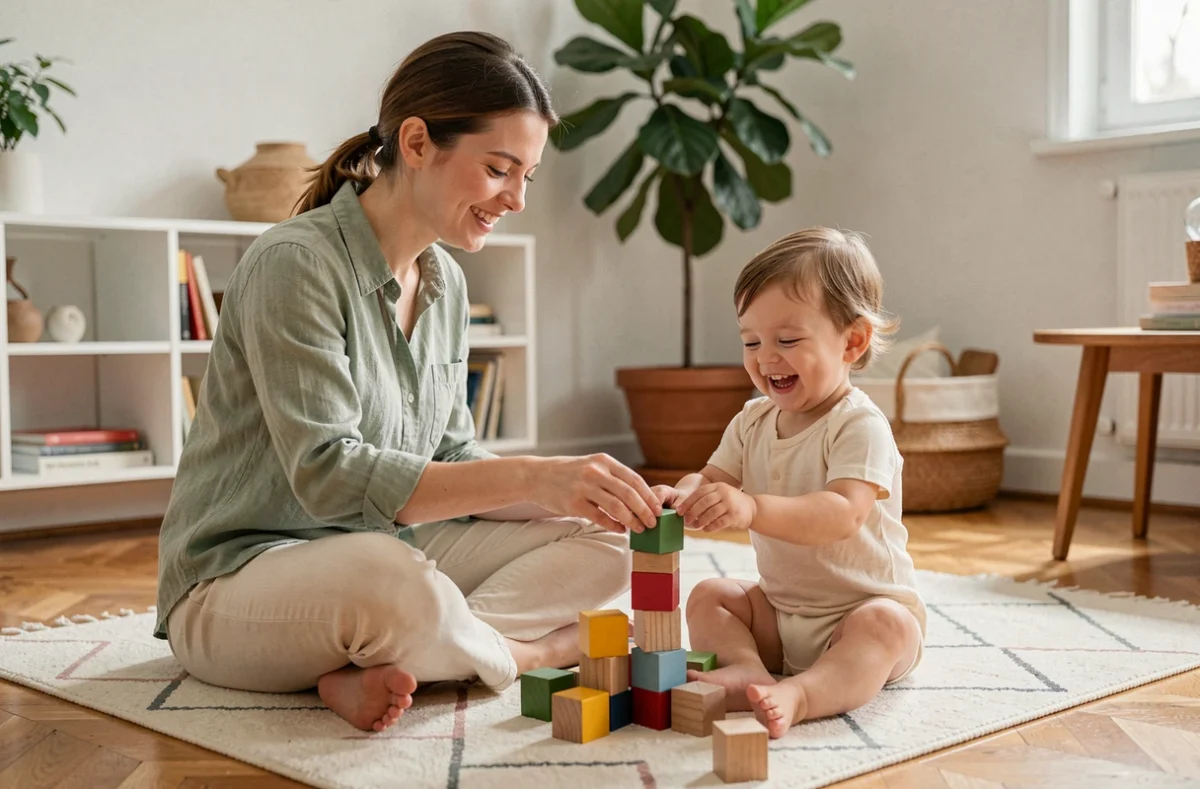
The growth of a child simultaneously involves biological, emotional, and cognitive mechanisms, the interaction of which remains difficult to isolate. Nutrition, sleep, physical activity, emotional environment: each factor matters, but none works alone. Recent data, particularly on screen exposure and the mental health of young people, necessitate an update of the framework that parents use daily to support their child’s growth and well-being.
Screens and Child Development: Beyond Just Counting Minutes
The inter-ministerial report Children and Screens, In Search of Lost Time, submitted in April 2024, reminds us that the duration of exposure is not enough to assess the impact of screens. The content viewed and the presence of an adult are just as important as the time spent.
The High Council for Public Health recommends avoiding screens before the age of 3 when interaction with an adult is not possible. Therefore, it is not the screen as an object that poses a problem, but what it replaces: free playtime, verbal exchanges, motor activity. A cartoon watched with a parent who comments on the scenes does not have the same effect as passive scrolling through short videos.
The challenge for parents is not to ban technology, but to concretely observe what the screen disrupts in the child’s day. The catalogs of materials and resources for children on Puériculture Bébés remind us that the daily environment, from toys to books, structures development just as much as the prohibitions placed on certain media.

Child Nutrition: Guidelines to Translate onto the Plate
Lists of nutrients (iron, zinc, calcium, vitamin D, omega-3) are widely circulated. Their practical utility remains limited if parents do not know how to translate them into a real plate.
Food diversification is not limited to introducing foods one by one. It also involves texture, temperature, and the context of the meal. A child who systematically eats pureed food after 12 months develops their chewing abilities less, which can delay language acquisition due to a lack of stimulation of the oro-facial muscles.
Concrete Guidelines for Daily Life
- Offer age-appropriate pieces as soon as the child can sit up, to stimulate fine motor skills and hand-mouth coordination
- Vary protein sources throughout the week (legumes, fish, eggs, meat) rather than aiming for the same daily intake
- Limit ultra-processed products, which displace foods rich in micronutrients without necessarily meeting energy needs
- Maintain water as the main drink, including during meals, to establish a habit that persists into adolescence
A calm meal environment promotes appetite self-regulation. Eating in front of a screen reduces attention to satiety signals, a link documented by several studies cited in the inter-ministerial report on screens.
Child Sleep and Growth Hormone: An Often Underestimated Window
Deep sleep concentrates the secretion of growth hormone. Shortening the night or fragmenting it with repeated awakenings does not just tire the child: it reduces the window during which the body builds bone and muscle tissue.
Sleep disturbances in young children are often linked to exposure to blue light in the evening. The High Council for Public Health emphasizes this link in its recommendations on screens. Turning off screens at least one hour before bedtime protects the quality of deep sleep.
Adapting the Rhythm to the Child’s Actual Age
A 2-year-old and a 5-year-old do not have the same napping needs or sleep architecture. Applying a rigid schedule based on a generic chart can create resistance at bedtime that has nothing to do with a sleep disorder.
Observing signs of fatigue (rubbing eyes, irritability, decreased attention) remains more reliable than theoretical timing. Adapting to the child’s own rhythm takes time, but it establishes a more sustainable routine than standardized methods.
Mental Health of Children and Adolescents: A Recent Warning Signal
The EnClass survey indicates that 45% of middle school students reported at least one psychological complaint more than once a week for at least six months (depression, irritability, nervousness). This figure concerns middle school students, but it invites us to look at what is being built upstream, starting from early childhood.
The emotional well-being of a child is not solely measured by the absence of symptoms. The ability to name emotions, ask for help, and tolerate frustration develops gradually, and the role of parents in this learning has been documented for a long time.
Identifying Signals Before Adolescence
A child who withdraws, loses their appetite for an extended period, or abandons activities they once enjoyed deserves special attention. These changes do not automatically indicate a disorder, but they warrant a discussion with a healthcare professional.
- Regular pediatric follow-up allows for the identification of developmental or behavioral discrepancies before they become fixed
- The French neonatal screening was expanded in 2025, enhancing early detection of conditions that may affect growth
- School health assessments, when actually conducted, provide an additional safety net
Regular medical follow-up remains the foundation of prevention, including for the psychological dimensions of development. Supporting a child’s growth means accepting that each age poses different questions, and that the answers evolve with the knowledge available.