The European automotive market is entering a phase where regulation dictates industrial choices more than consumer demand. Between the regulation on vehicle circularity, Euro 7 constraints on battery durability, and the collapse of the residual value of used electric vehicles, the lines are moving quickly.
Regulation 2026/1738 on vehicle circularity: what changes for the automotive sector
The Regulation (EU) 2026/1738 on vehicle circularity and the management of end-of-life vehicles provides for a general application starting September 1, 2028. This text profoundly modifies the very design of vehicles by imposing recyclability thresholds and regulating the presence of hazardous substances in components.
In practical terms, manufacturers will need to integrate disassembly and material traceability constraints from the design phase. Equipment suppliers are directly concerned: each part must meet documented composition criteria.
To find all auto info on Info du Web, simply follow the regulatory developments that are reshaping the sector month by month.
The stakes are not only environmental. This regulation creates a technical barrier to entry for manufacturers who do not control their supply chain in Europe, particularly some Chinese brands whose vertical integration relies on suppliers outside the EU.

Battery passport and Euro 7 constraints: electric battery durability under control
Two measures are converging to transform the used electric vehicle market. The digital battery passport, mandatory from February 18, 2027, will impose complete traceability via QR code: state of health (SoH), charging history, material provenance. Each electric vehicle battery will become a documented asset, comparable to a stamped maintenance log.
At the same time, Euro 7 introduces minimum residual capacity thresholds for batteries of electric and plug-in hybrid cars for new models approved from November 2026. These thresholds will then extend to all new vehicles sold in Europe.
The impact on the used market is direct. An electric vehicle with a documented SoH that meets Euro 7 thresholds will retain a higher residual value than an earlier model without a passport. We recommend that used vehicle professionals prepare now to integrate this data into their evaluation grids.
What the battery passport changes for resale
- The SoH becomes an enforceable data point: a buyer can demand to consult the passport before any transaction, reducing the information asymmetry between seller and buyer.
- Batteries without traceability (vehicles imported outside the EU before 2027) risk an additional depreciation due to lack of certified data.
- Refurbishment networks will need to adapt to provide an updated passport after intervention, or risk blocking the vehicle’s return to circulation.
Depreciation of used electric cars: a rapidly changing market
Used electric vehicles are experiencing massive depreciation, a level that makes the segment attractive for buyers but problematic for long-term rental companies and corporate fleets.
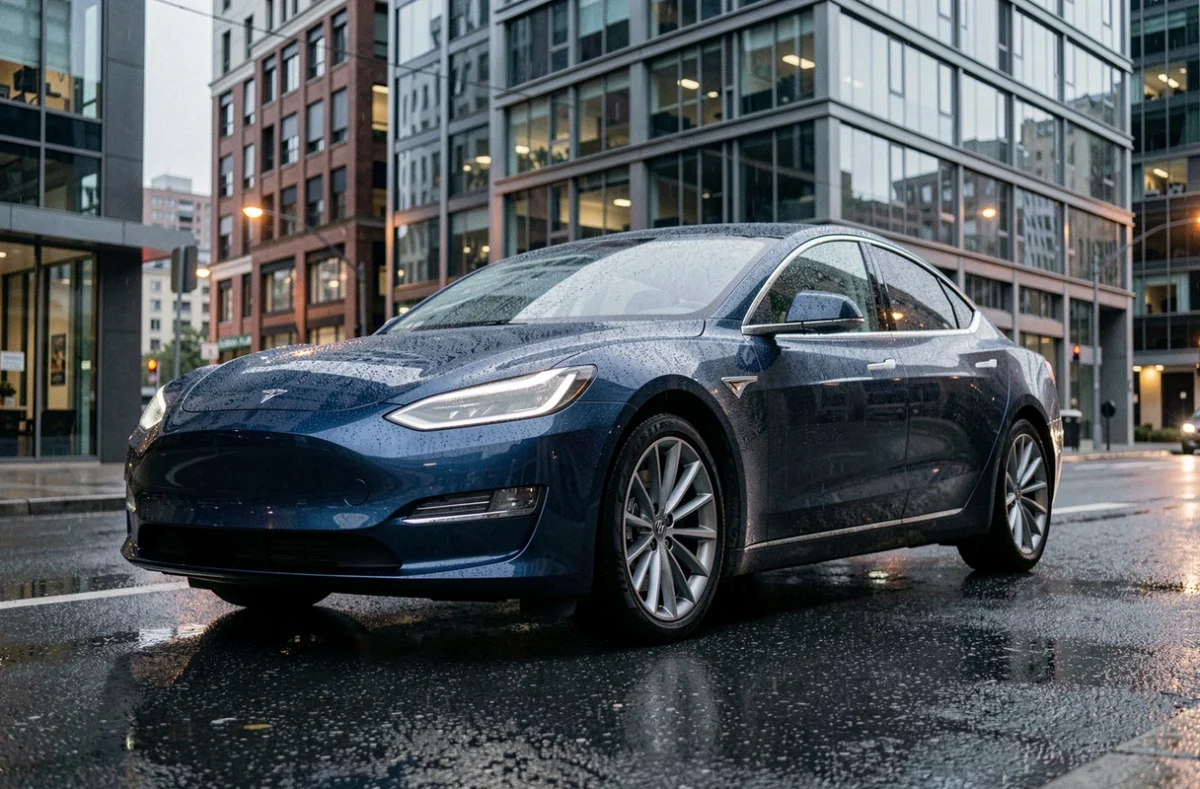
The used electric vehicle market is finally taking off in France, driven by this price drop. Models like the Renault Zoé, the Peugeot e-208, or the Dacia Spring are being exchanged at prices that would have seemed unthinkable two years ago. Tesla is not escaping the trend, with Model 3s whose residual value is shrinking quarter after quarter.
This situation creates an industrial paradox. Manufacturers who have heavily invested in electric vehicles see their new models competing with their own used vehicles at rock-bottom prices. Leasing, intended to protect residual value, becomes a financial risk when programmed buyback values no longer correspond to real market prices.

Paris Motor Show 2026 and the offensive of Chinese manufacturers in Europe
MG, BYD, Xpeng, Jaecoo, and soon Geely now regularly occupy a place in monthly registrations in France. The increasing presence of Chinese brands at the Paris Motor Show illustrates the intensifying competitive pressure on European manufacturers.
The slowdown in the domestic Chinese automotive market accelerates the need for export to Europe. Local overproduction pushes these manufacturers to offer aggressive pricing, often below that of their European counterparts.
Points of friction for Chinese brands
- Regulation 2026/1738 imposes material traceability constraints that are difficult to meet with exclusively Asian supply chains.
- The after-sales network remains a barrier: French buyers demand a network of service points comparable to that of established brands, which few new entrants can guarantee.
- Additional tariffs on electric vehicles imported from China, combined with tightening regulations, gradually reduce the initial pricing advantage.
The automotive market at the end of 2026 is less about dealerships than about European regulatory texts. The battery passport, Euro 7 thresholds, and the regulation on circularity are redefining the competitiveness conditions for the entire sector.