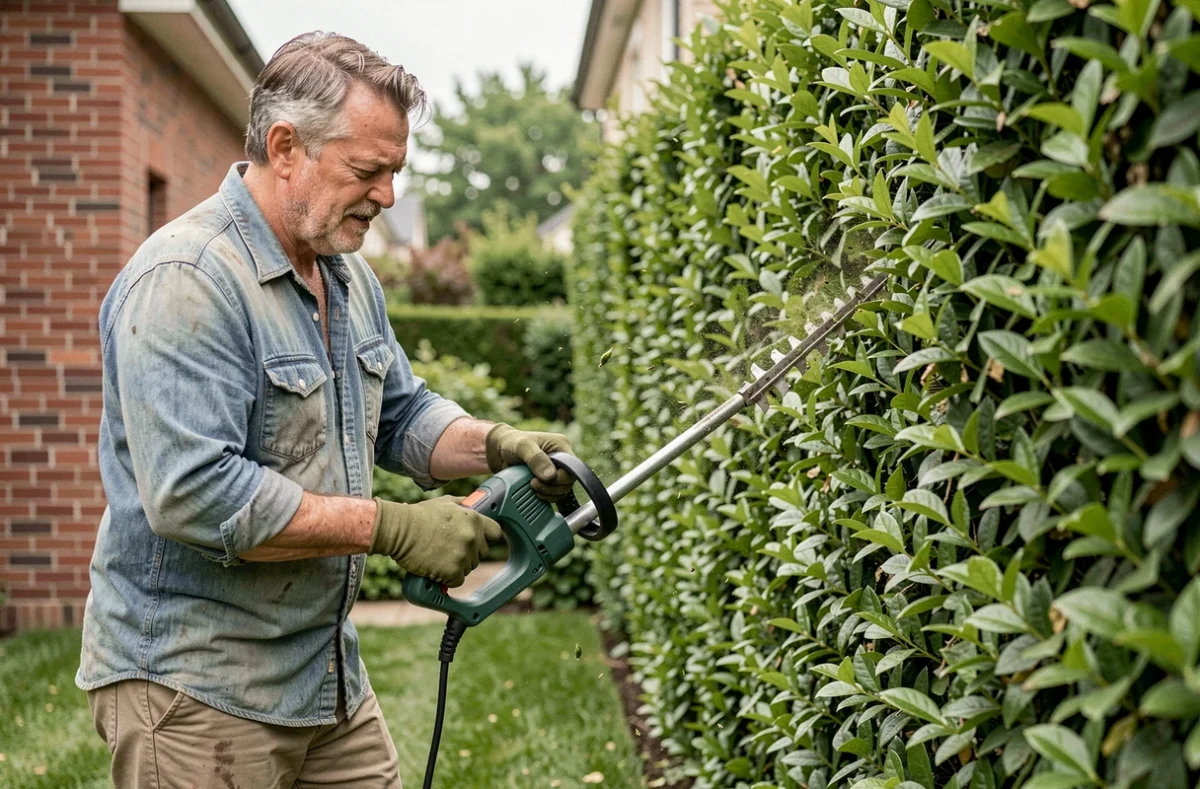
An electric hedge trimmer is primarily chosen based on the geometry of its blade and the type of teeth, not on the advertised power in watts. Too many buyers focus on the motor while it is the blade-tension combination that determines the quality of the cut and the tool’s lifespan. Here, we detail the technical points that make a difference in the field.
Tooth spacing and actual cutting capacity of the electric hedge trimmer
The spacing of the teeth determines the maximum diameter of branch that the hedge trimmer can cut cleanly. On a wired electric model, we generally observe three ranges: around 16 mm for boxwood or young privet hedges, around 20-22 mm for common thujas and laurels, and over 25 mm for country hedges with more woody shoots.
An undersized spacing forces the motor and crushes the branch instead of shearing it. The result: fibrous cuts that brown within a few days and expose the plant to fungal diseases. Before buying, measure the diameter of the year’s shoots on your hedge. This data should guide your choice, not the motor power displayed on the packaging.
The models listed on taille-haie-electrique.com allow for direct comparison of tooth spacings by usage category, simplifying the sorting among the multitude of available technical sheets.
Blade length and ergonomics: adapt the tool to the hedge, not the other way around
A long blade (over 55 cm) covers more surface area per pass. It is suitable for straight and tall hedges. However, on a rounded hedge, a topiary, or a narrow passage between two flower beds, it becomes cumbersome and imprecise.
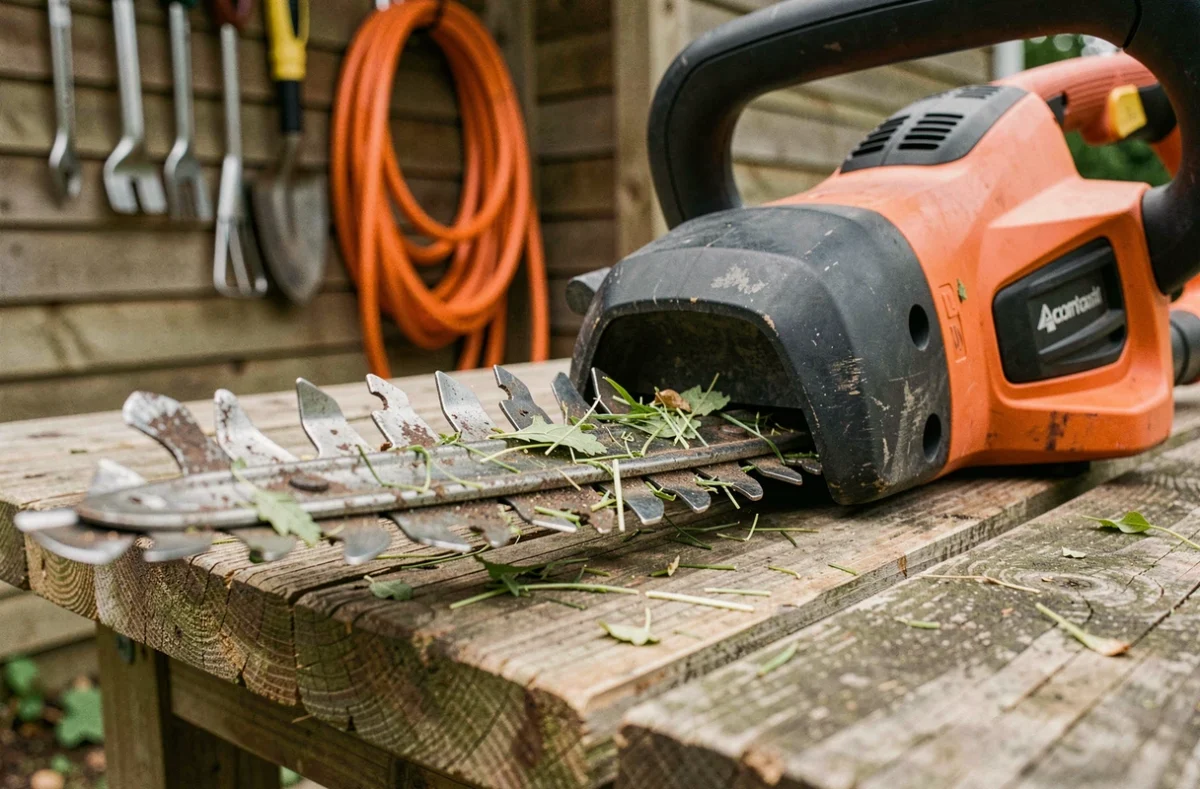
For hedges of moderate height and shaped forms, a short blade offers significantly better control than a long blade. Landscape professionals often use two blade lengths depending on the job. For an individual, it is better to choose the length that corresponds to the majority of the linear area to be maintained.
Weight and balance in vertical cutting situations
A wired electric hedge trimmer generally weighs less than a thermal model with an equivalent blade. But the gross weight does not tell the whole story. It is the distribution of mass that determines fatigue during vertical cuts (hedge sides) and at height.
A motor placed very far back creates a lever arm that strains the wrists. We recommend checking the position of the front handle: it should allow the wrist to pivot without forcing when transitioning from a horizontal cut to a vertical cut. Models equipped with a multi-directional rotating handle significantly reduce joint strain during sessions longer than twenty minutes.
Regulations on hedge trimming: what changes from 2027
The agricultural orientation law of March 24, 2025, established a strengthened framework for the protection and sustainable management of hedges. Departmental calendars set by prefectural decree will come into effect on January 1, 2027, with a minimum prohibition period of 21 weeks for certain hedges.
An individual is not currently subject to a uniform national prohibition on trimming their hedge on a specific date. However, it remains prohibited to destroy or damage the nests, eggs, or birds of protected species. The LPO and the French Office for Biodiversity recommend avoiding trimming from mid-March to the end of August, during the nesting period.
- Before any trimming, visually inspect the hedge along its entire length to spot any potentially active nests, even discreet ones.
- An electric hedge trimmer cuts quickly and can make a nest difficult to spot: slow down your progress and work in short sections.
- In case of doubt, postpone the trimming for a few weeks. The penalty for destroying a protected species nest can reach a fine of 150,000 euros.
For agricultural operations under CAP aid, the BCAE 8 rule prohibits hedge trimming from March 16 to August 15 for the 2026 campaign. This constraint does not apply to private gardens, but it provides a useful calendar reference.

Blade maintenance and electrical safety on the field
A dull blade consumes more power and damages the shoots. After each session, we recommend cleaning with a brush to remove sap and plant residues, followed by a spray of anti-corrosion lubricant on the teeth. Sharpening with a flat file should be done every five to ten uses depending on the density of the hedge.
On the electrical safety side, the critical point remains the extension cord. An undersized cable in section causes a voltage drop that overheats the motor. Use an outdoor-rated extension cord, with a section suitable for the deployed length. Beyond thirty meters, power loss becomes noticeable on most models.
Often overlooked personal protections
Protective glasses and cut-resistant gloves are not optional. Wood fragment projections reach high speeds, and accidental contact with the moving blade can cause deep lacerations. Reinforced gloves at the fingers and back of the hand effectively complement the hand guard integrated into the device.
The last point to check before each use: the proper functioning of the blade brake. On an electric hedge trimmer, the blade should stop in less than a second after releasing the trigger. If the stopping time increases, have the mechanism serviced before resuming cutting.