In a world where digital communications dominate, the art of letter writing retains its timeless charm. Whether to express deep emotions, convey important information, or simply maintain a personal connection, the letter remains a powerful communication tool. The care taken in drafting a letter can make all the difference, whether it is a professional message or personal correspondence.
It is therefore essential to know the appropriate structures and formulas to capture your recipient’s attention.
The Different Types of Letters
Written correspondence comes in several genres, each with its own particularities and codes. Understanding these differences allows you to convey the right message in the best possible way.
- The formal letter is generally intended for professional communication. It requires a sober style and a clear structure, including an introduction, a development, and a conclusion. The greetings and polite formulas must be chosen carefully to reflect the respect and formality of the relationship.
- The informal letter, on the other hand, offers more freedom of expression. Often used between friends or family members, it allows for a more relaxed and personal language. Despite its casual tone, adherence to basic conventions, such as the opening and conclusion, remains important.
- Love letters are undoubtedly the most personal. They should be imbued with sincere and authentic emotions, while also being written with a certain elegance to touch the recipient’s heart.
Structure and Key Elements of a Letter
For your letter to achieve its purpose, adhering to a well-defined structure helps organize your ideas and clarify your message.
The first step is choosing an appropriate header. This generally includes your address and the date, placed at the top left or right, according to conventions. Next follows the name and address of the recipient, particularly in formal letters. An opening formula, such as Dear or Sir, marks the beginning of the body of the letter. In the body itself, develop your message in several well-constructed paragraphs. Conclude with an appropriate polite formula and a handwritten signature to add a personal touch.
Letter Example: Inspiration and Precision
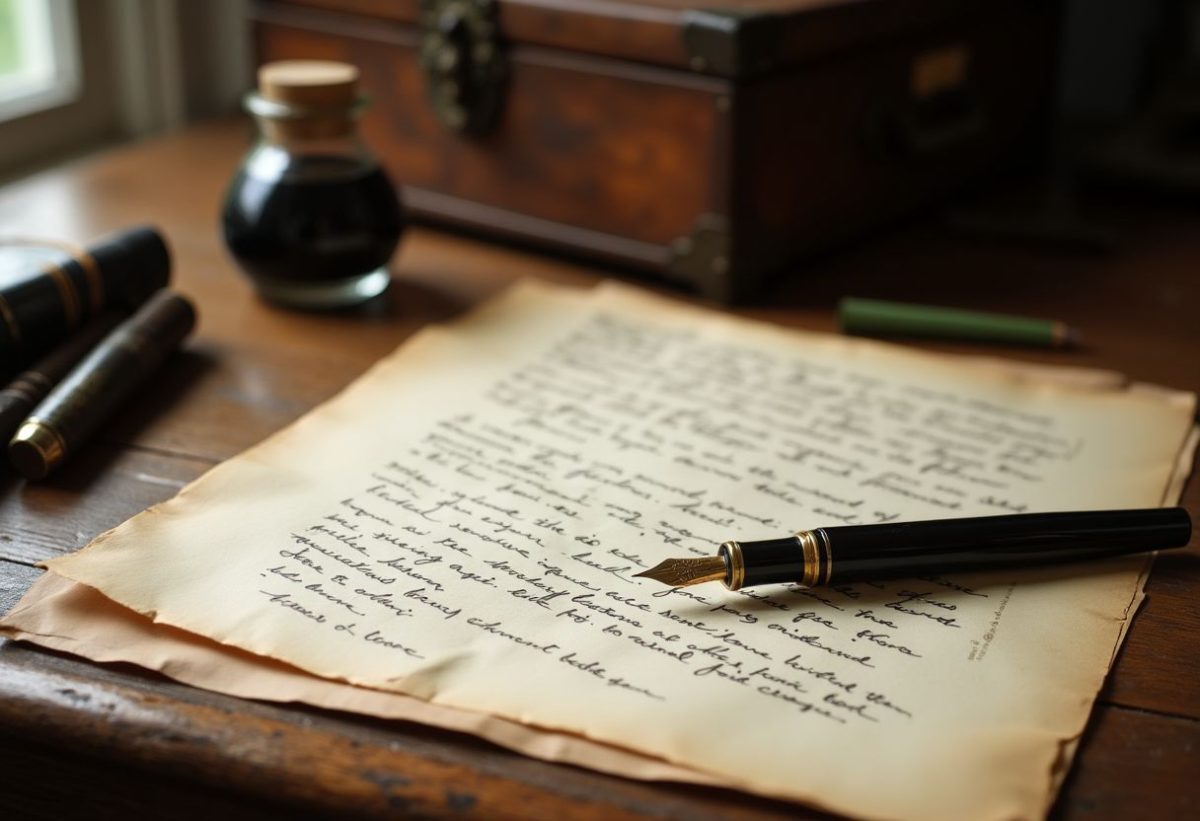
Having a model to follow can greatly facilitate the writing of your own letter. Here is an example of a letter that will give you an idea of the phrases to use and the structures to adopt.
By consulting an example, you can see how each element is harmoniously organized, highlighting the main message.
This also allows you to observe the effective use of polite formulas and greetings. Feel free to personalize these templates to better reflect your own style and intention.
Polite Formulas: Respect and Courtesy
Mastering polite formulas ensures that your letter is perceived as respectful and professional. Here are some points to consider when using them.
- The opening formula should be appropriate to the relationship with the recipient. For a formal letter, using Sir or Madam, followed by the name if possible, is appropriate.
- To conclude, the polite formula should express your respect. In a professional context, I beg you to accept, Sir/Madam, the expression of my distinguished salutations is often used.
- Informal letters allow for simpler and more personal formulas, such as Best wishes or Yours sincerely.